
Equal parts. Not equal jobs.
Pick a path. Every drink below is made with 9diDANTE.
9% ABV or less in the glass: the strength of a beer.
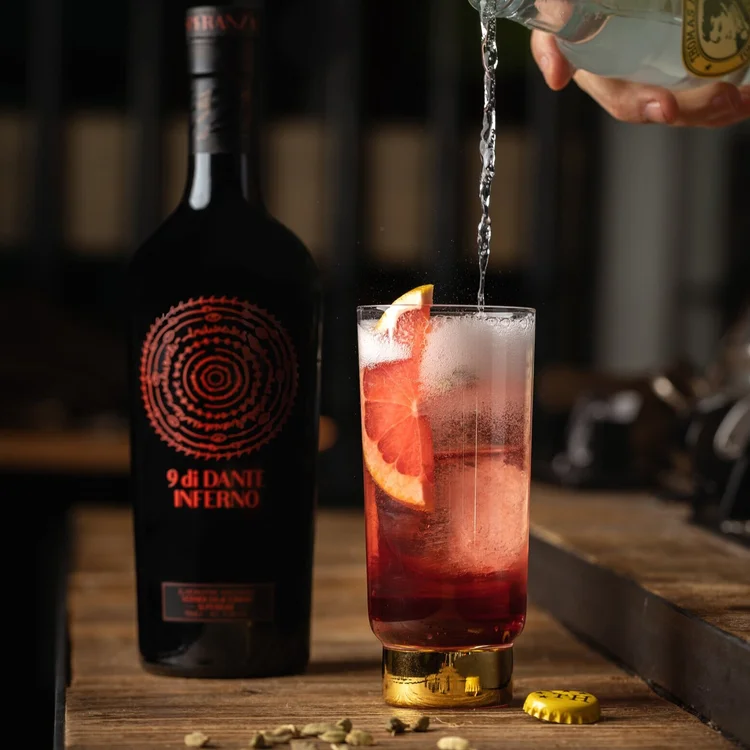
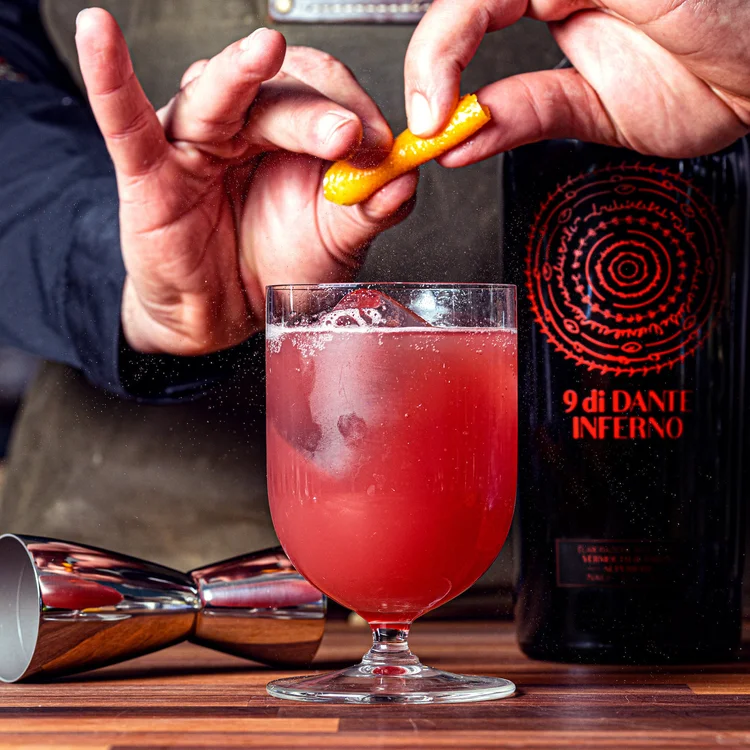
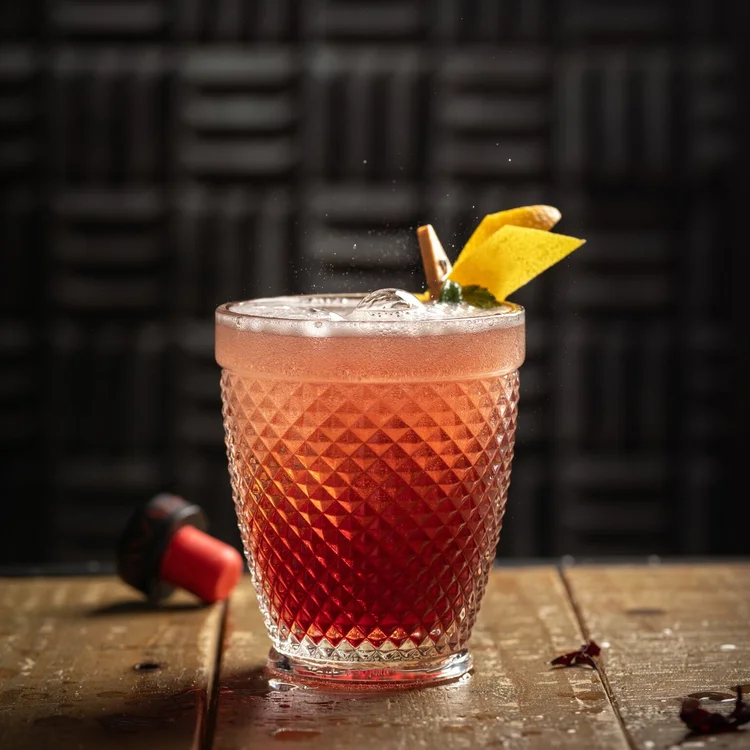
ABV figures are estimates, to be confirmed. [PLACEHOLDER] marks a spec still to confirm.
The canon, made with 9diDANTE.
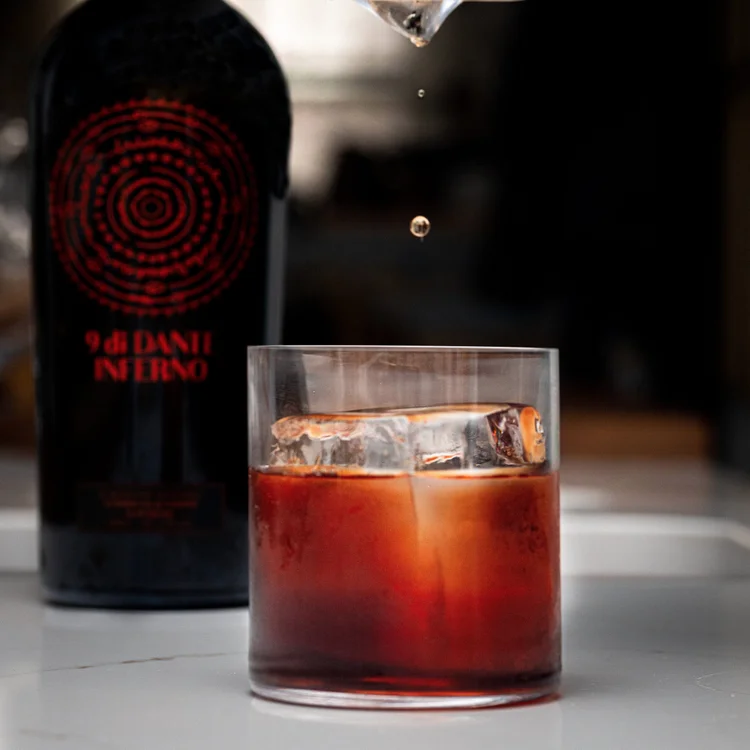
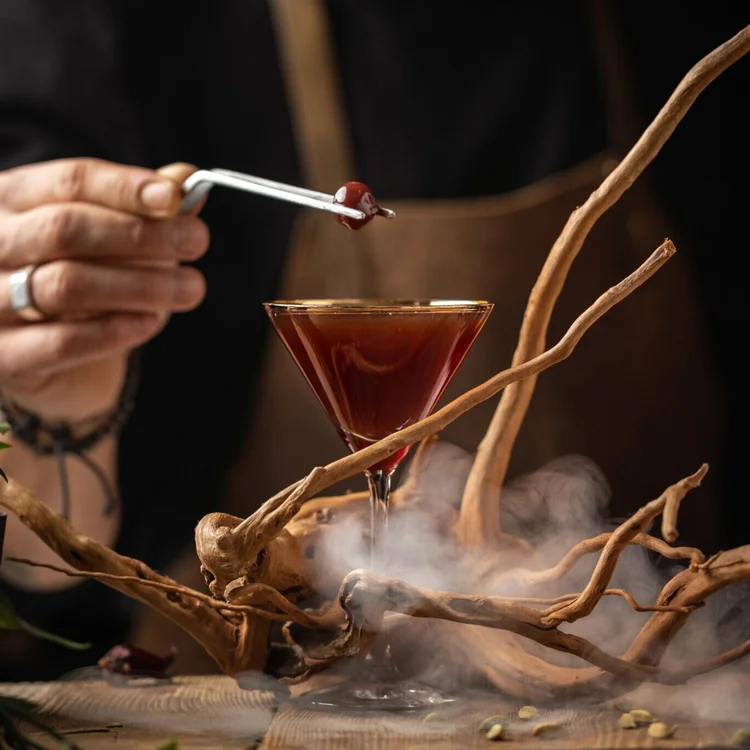
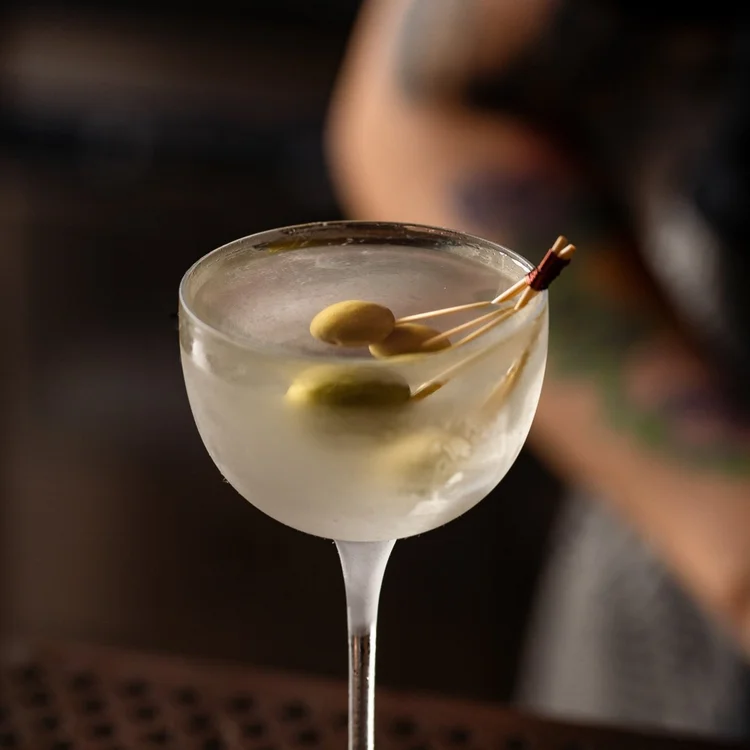
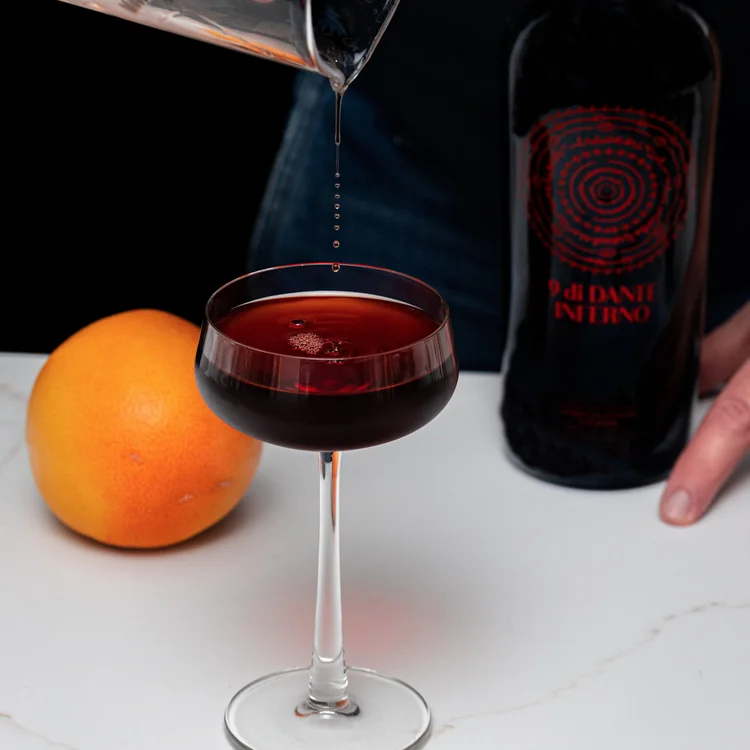
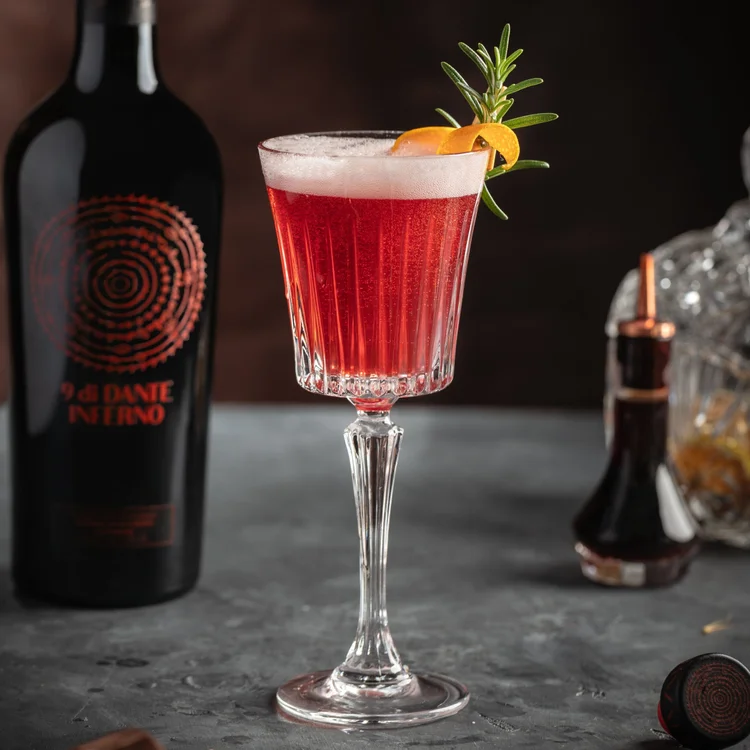
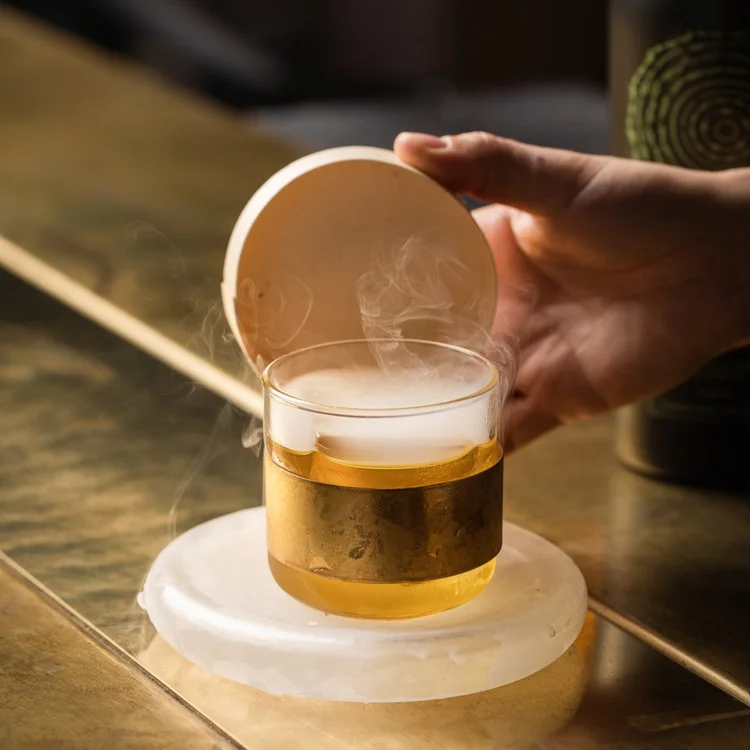
ABV figures are estimates, to be confirmed. [PLACEHOLDER] marks a spec still to confirm.
House serves and new ideas.
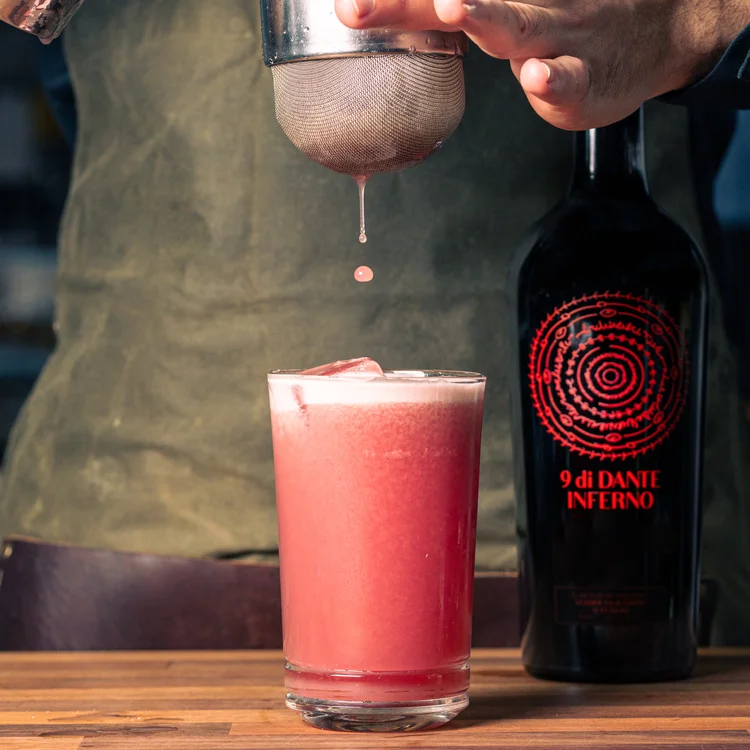
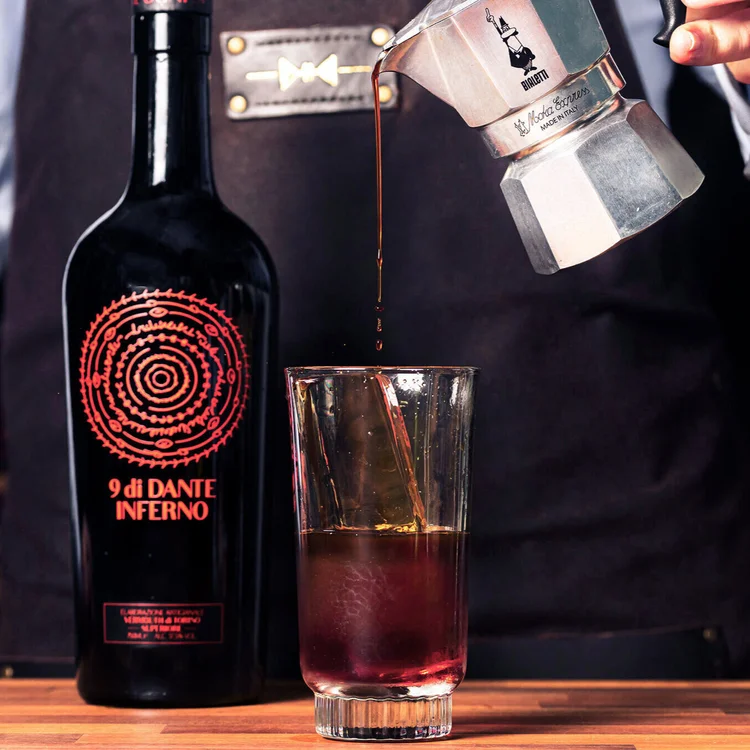
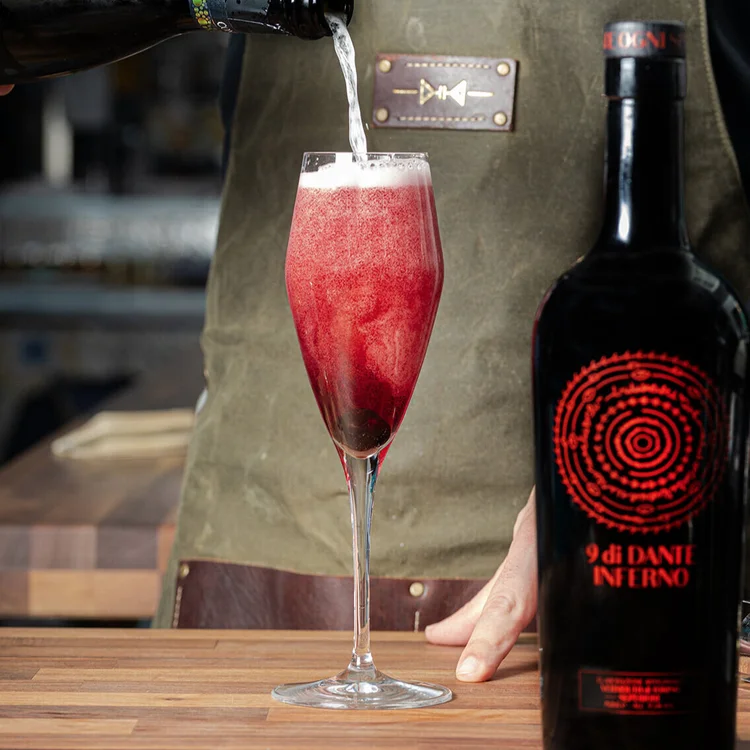
ABV figures are estimates, to be confirmed. [PLACEHOLDER] marks a spec still to confirm.
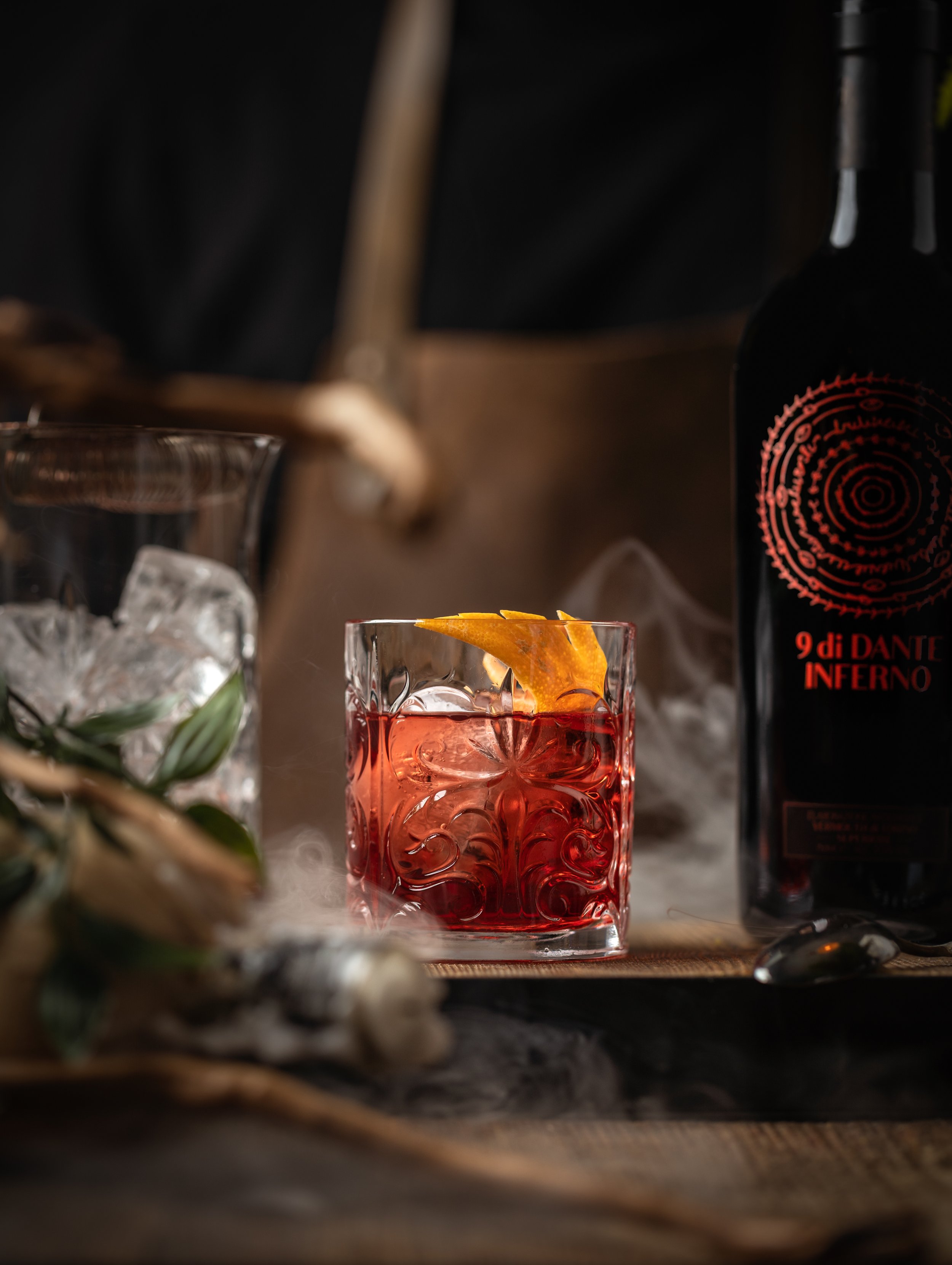
30 ml INFERNO · 30 ml gin · 30 ml red bitter. Stir on ice, orange peel. [DRAFT SPEC — confirm with Mario]
Equal parts. Unequal pleasure.
45 ml rye · 45 ml INFERNO · 2 dashes aromatic bitters. Stir, cherry. [DRAFT SPEC — confirm with Mario]
Half whiskey, half confession.
45 ml gin · 45 ml PURGATORIO · dash orange bitters. Stir, lemon twist. [DRAFT SPEC — confirm with Mario]
The Martini, forgiven.
PARADISO, tequila or mezcal, grapefruit, topped long.
Sunshine with a past.
Make your own luck.
Our grapes
Vermouth is at least three-quarters wine. In a Vermouth di Torino Superiore, at least half must come from Piedmont. Ours is all Piedmont DOC wine, from four native grapes, each chosen for what it brings to the glass.
Who goes where
Cortese is the one grape in all three. Nebbiolo, the grape of Barolo, makes up the last 12% of PARADISO.
Red · INFERNO 50%
The little sweet one. It isn't.
Its name means "little sweet one", yet Dolcetto makes wines that are dry, deeply coloured and high in tannin. It is the everyday red of the Langhe, the bottle on the table while the Barolo rests in the cellar.
In INFERNO it comes first on the nose, with cherry and a hint of grip, and it gives the vermouth its tannic backbone.
INFERNO's ruby comes straight from the Dolcetto. No added caramel: a truly red vermouth.
White · in all three
The thread through the whole journey.
Cortese is the white grape behind Gavi, one of Italy's classic whites. It is crisp, fresh and naturally high in acidity, which is exactly what a vermouth needs to stay lively next to sugar and bitter herbs.
It balances Dolcetto's strength in INFERNO, sharpens the Arneis in PURGATORIO and carries PARADISO almost on its own.
50% of INFERNO, 40% of PURGATORIO, 88% of PARADISO. Hell, the mountain and Heaven, all on Cortese.
White · PURGATORIO 60%
The little rascal that nearly vanished.
Arneis means "little rascal" in Piedmontese, for a vine so difficult to grow that farmers gave up on it. Only a handful of growers in the Roero hills kept it alive. Today it is one of Piedmont's most admired whites, sometimes called white Nebbiolo.
It gives PURGATORIO its floral nose and its body: an extra dry that is never thin.
A grape that survived its own purgatory. PURGATORIO was the first Vermouth di Torino Superiore to put it at the centre.
Red · PARADISO 12%
The king of Piedmont, in a small dose.
Nebbiolo is the grape of Barolo and Barbaresco. Its name comes from nebbia, the fog that settles over the Langhe in autumn, when warm Mediterranean air meets the cold from the Alps. It is pale enough to make a rosé, and far too prized to be used that way. Almost.
In PARADISO a small share of it gives the pale pink colour, the raspberry and star anise on the nose and a gentle tannin.
A rosé vermouth touched by the grape of Barolo is a rare thing. That is the point of Paradise.
Grapes and herbs
Every bottle is made just outside Alba, where these vineyards meet. The wine is the body. The 27 botanicals are the soul.